 Dec, 1 2025
Traveling in Europe doesn’t always mean you’ll find someone who speaks your language. That’s especially true when you’re looking for companionship and need to connect with someone on a personal level. Many people assume that hiring a companion in Europe means instant chemistry - but if you don’t share a common language, things can get awkward, confusing, or even unsafe. The real issue isn’t finding someone willing to meet - it’s making sure you both understand each other clearly, safely, and respectfully.
Language isn’t the only barrier
You might think that if someone speaks English, you’re set. But fluency on paper doesn’t always mean comfort in conversation. A woman in Berlin might have studied English for ten years, but still hesitate to talk about personal topics in a second language. Someone in Lisbon might understand every word you say, but feel embarrassed to respond. Cultural norms around directness, eye contact, and personal space play a big role too. In some countries, asking too many personal questions upfront feels invasive. In others, silence is seen as discomfort, not politeness.It’s not about whether they can speak your language - it’s about whether they feel safe enough to use it with you.
Use simple, clear language
Avoid slang, idioms, and fast speech. Phrases like “Let’s hang out,” “I’m down,” or “It’s a vibe” won’t translate well - and they might confuse or offend. Stick to short, direct sentences. Instead of saying, “I’d love to spend some quality time with you,” say, “I want to meet you for dinner and conversation.”Use basic vocabulary. Say “restaurant” instead of “eatery.” Say “time” instead of “moment.” Say “you” and “I” clearly. Don’t assume they know British or American slang. Even words like “flat” (UK for apartment) or “truck” (US for lorry) can cause confusion.
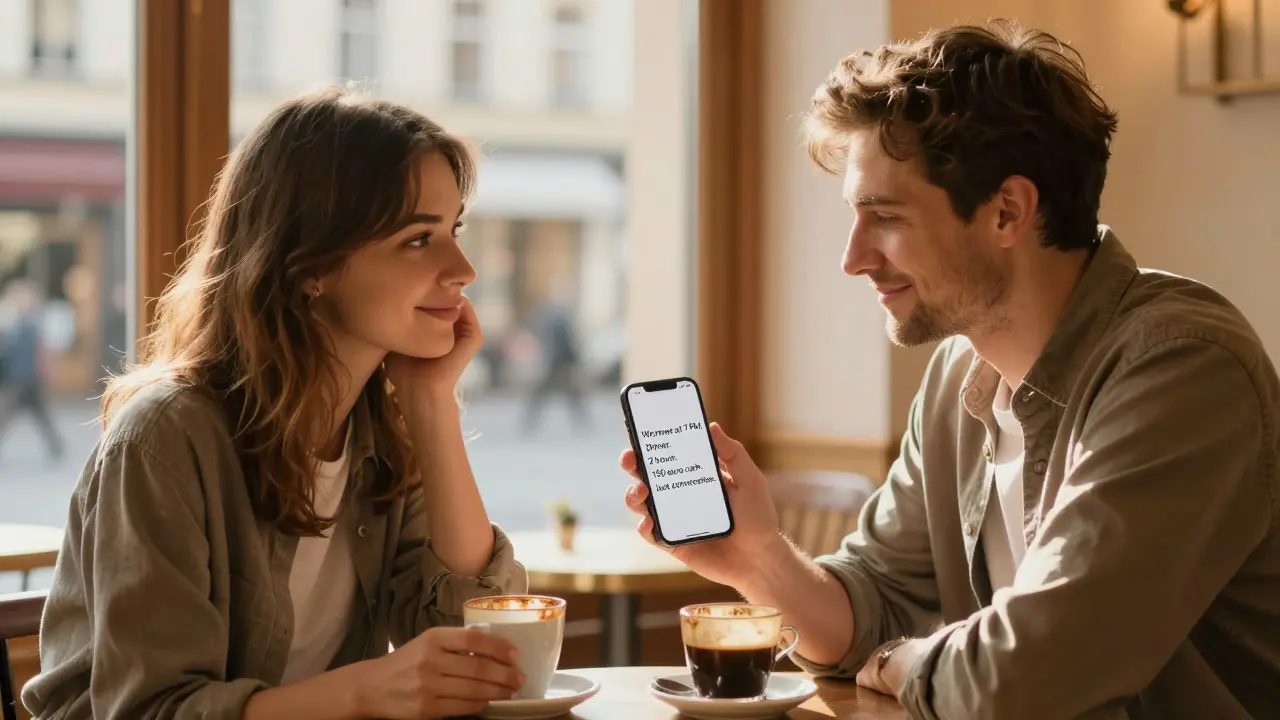
Write down key phrases before you meet. If you’re planning to discuss boundaries, timing, or payment, type them out in simple English. Show them on your phone. Most people in Europe are used to seeing written communication - it’s easier than guessing tone or meaning.
Learn a few phrases in their language
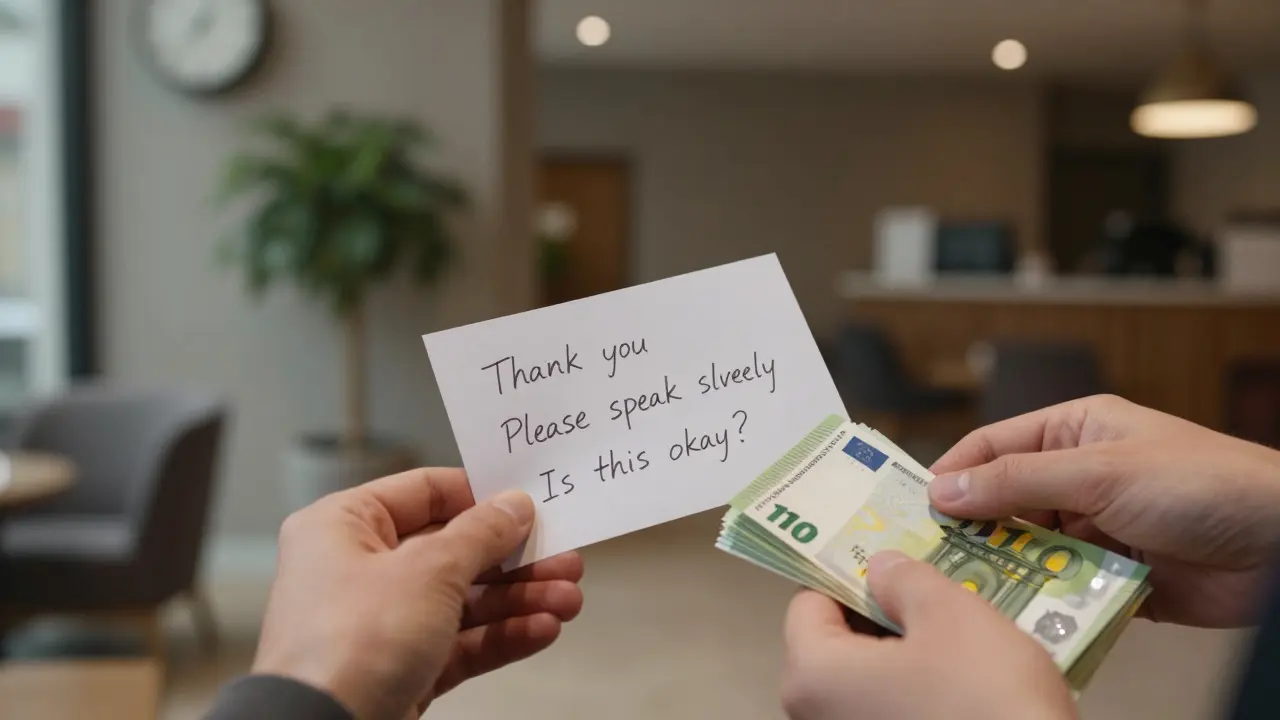
Even a few words go a long way. Saying “Thank you” in their language - “Dank je” in Dutch, “Gracias” in Spanish, “Merci” in French - shows respect. It tells them you’re making an effort. It breaks the ice. People respond to kindness more than fluency.You don’t need to become fluent. Just learn:
- Good morning / Good evening
- Thank you
- How are you?
- I don’t understand
- Please speak slowly
- Is this okay?
Use Google Translate or DeepL to practice pronunciation. Record yourself saying the phrases and play them back. Don’t be afraid to sound silly - it’s better than staying silent.
Use translation tools - but wisely
Apps like Google Translate, DeepL, and iTranslate work well for short, clear messages. But don’t rely on them for complex conversations. Translation apps often miss tone, sarcasm, or emotional nuance. A simple “I like you” might come out as “I find you attractive” - which can feel too forward or too clinical.Use translation tools to:
- Confirm pricing or time limits
- Clarify location or meeting time
- Ask about boundaries or preferences
Never use them to flirt, joke, or make romantic comments. Keep it practical. If you need to explain something personal, write it down in simple English, show it to them, and watch their reaction. If they nod, smile, or say “yes,” you’re good. If they look confused, pause. Don’t push.

Watch body language
When words fail, eyes and posture speak. If someone leans back, crosses their arms, or avoids eye contact, they might be uncomfortable - even if they say “yes.” If they smile, nod, or lean in, they’re likely at ease. In many European cultures, physical cues matter more than verbal agreement.Pay attention to:
- Do they smile when you say something? Or just nod politely?
- Do they keep their phone nearby? That’s often a sign they’re waiting for an escape.
- Do they check the time often? They might be unsure about the arrangement.
Don’t assume silence means consent. Silence in one culture might mean discomfort in another. If you’re not sure, pause. Ask: “Is this okay?” Show them the words on your phone. Let them respond in writing if they prefer.
Be clear about expectations - early and in writing
Misunderstandings about time, money, or services are the most common source of conflict. Don’t wait until you’re face-to-face to discuss this. Use a messaging app to confirm:- Meeting time and place
- Duration (e.g., “1 hour,” “2 hours”)
- What’s included (dinner? conversation? physical contact?)
- Payment method (cash? app? bank transfer?)
Write it in simple English. Example:
“We meet at 7 PM at Café de l’Opera. 2 hours. Dinner included. I pay 150 euro in cash. Just conversation and cuddling. No sex. Is this okay?”
Let them reply in writing. If they say yes, you’re both protected. If they don’t reply, don’t assume anything. Walk away. This isn’t about control - it’s about safety and respect.
Respect their boundaries - even if they’re unclear
Some women in Europe may say “yes” because they’re afraid to say no. They might worry about losing income, facing judgment, or being reported. Don’t pressure them. If they hesitate, pause. If they change the subject, let them. If they seem nervous, offer to stop.Ask: “Do you want to stop?” Show it on your phone. Give them space to answer. Never assume that because they showed up, they’re okay with everything.
Real connection doesn’t require perfect language. It requires trust - and trust comes from patience, not persuasion.
Know the local rules - and stick to them
Laws around companionship vary wildly across Europe. In the Netherlands, sex work is legal and regulated. In France, selling sex isn’t illegal, but buying it is. In Poland, it’s a gray area - tolerated but not protected. In Germany, it’s legal but requires registration in some cities.Don’t assume what’s allowed in one country works in another. If you’re unsure, check official government sites or expat forums. Avoid places where police regularly raid apartments or hotels. Your safety depends on knowing the local reality - not your assumptions.
Use trusted platforms - and check reviews
Not all websites or apps are equal. Some are scams. Others are unsafe. Stick to platforms that:- Require verified profiles
- Allow written communication before meeting
- Have public reviews from other users
- Don’t push you to move to WhatsApp or Telegram too fast
Look for reviews that mention language issues. If multiple people say, “She didn’t speak English but we used Google Translate and it worked,” that’s a good sign. If people say, “She disappeared after I paid,” walk away.
What to do if things go wrong
If you feel confused, uncomfortable, or unsafe:- Stop the interaction immediately
- Leave the location calmly
- Don’t argue or try to negotiate
- Don’t threaten or insult
- Save all messages and receipts
If you’re in danger, call local emergency services. In most of Europe, dial 112. It works in every country, even if you don’t speak the language. The operator will connect you to someone who can help.
It’s not about perfection - it’s about respect
You don’t need to be fluent. You don’t need to be charming. You just need to be honest, patient, and clear. The best connections happen when both people feel safe enough to be themselves - even if they’re speaking through a phone screen or a translation app.Language is a tool. Respect is the foundation.
Do all call girls in Europe speak English?
No. While many in major cities like Berlin, Amsterdam, or Barcelona speak some English, fluency varies. In smaller towns or among older workers, English may be limited. Always assume you’ll need to use simple language or translation tools. Don’t rely on assumed fluency.
Can I use Google Translate during the meeting?
Yes - but only for practical matters like time, price, or boundaries. Don’t use it for flirting, jokes, or emotional conversations. Translation apps often miss tone and can make things feel cold or robotic. Use it to clarify, not to connect. Show the text on your phone and watch their reaction.
What if I don’t understand what they’re saying?
Don’t pretend to understand. Say “I don’t understand” in their language, or type it on your phone. Ask them to speak slowly. Write down what you think they meant and show it to them. Most people will appreciate your honesty. Pushing through confusion leads to misunderstandings - and sometimes danger.
Is it safe to meet someone who doesn’t speak my language?
Yes - if you take precautions. Meet in public first. Confirm details in writing. Use translation tools for boundaries. Trust body language over words. Never go to a private location without verifying the person’s identity and reputation. Safety isn’t about language - it’s about preparation.
How do I know if they’re comfortable?
Look for open posture, eye contact, and relaxed facial expressions. If they smile naturally, nod, or lean in, they’re likely okay. If they check their phone often, avoid eye contact, or give short answers, they may be uneasy. Ask: “Is this okay?” in writing. Let them respond how they feel safe.
What’s the best way to pay?
Cash is still the most common and safest method in most European countries. Avoid bank transfers or apps unless you’ve confirmed the person’s identity through multiple reviews. Always agree on the amount in writing before meeting. Never pay in advance unless you’ve met them in person and confirmed their details.